【Sapporo · Maruyama】First-Timers Welcome—Hand-Building Pottery at Maruyama Tobo
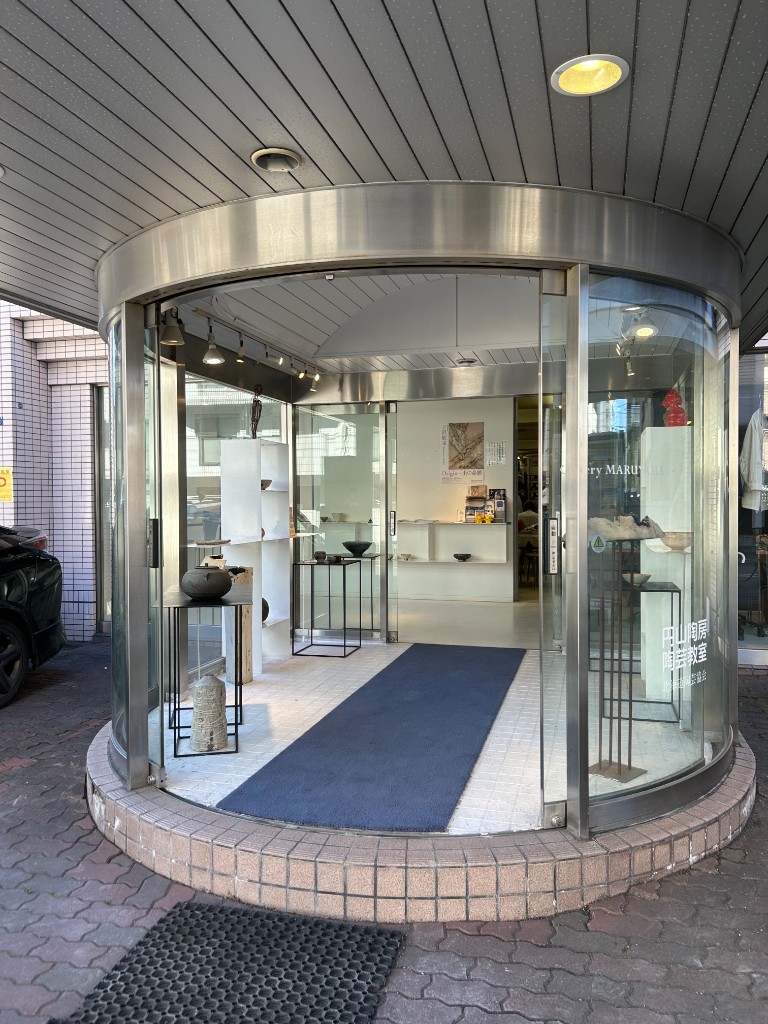
🏺 The Entrance—A Striking Circular Glass Facade
About five minutes’ walk from Maruyama-koen Station, you’ll spot a building with a distinctive circular glass entrance—that’s Maruyama Tobo. Through the glass you can see a gallery space lined with finished pottery, making it hard to walk past without stopping. The entrance, labeled “Gallery MARU”, functions as both a pottery school and a gallery, and even a quick look through the window is worth your time.
📍 Essentials
- Name: Maruyama Tobo (円山陶房)
- Address: Sunshine Maruyama 1F, 23-2-20 Odori-nishi, Chuo-ku, Sapporo, Hokkaido 〒064-0820
- Phone: 011-615-1858
- Website: maruyama.hokkaidotougei.com
- Map: Open in Google Maps
- Hours: 10:00–18:00 (Tue & Wed until 20:00)
- Closed: Irregular—confirm in advance
- Reservations: Required (book at least 1 day ahead; Sunday walk-ins possible if space available)
- Price: 1-day experience from ¥1,900 (includes materials & firing)
- Parking: 3 spaces (may be full)
🚉 Access
- Subway: About 5 minutes on foot from Maruyama-koen Station (Tozai Line), Exit 5
🎨 How the Experience Works—Learning Together in a Small Group
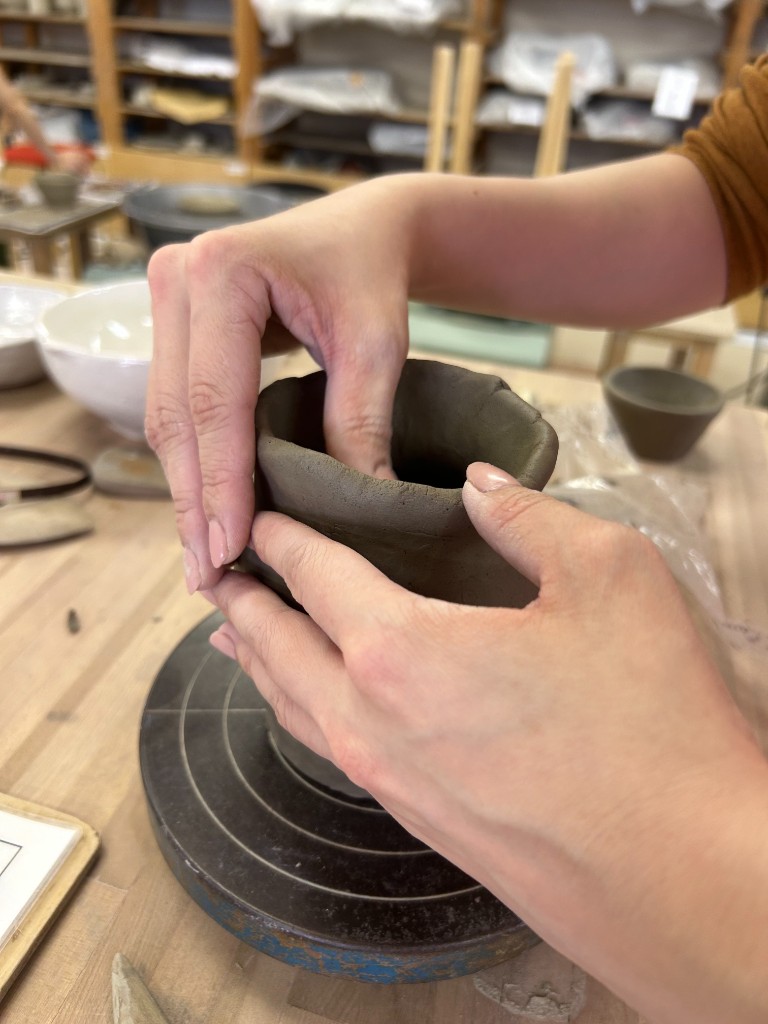
Sessions are run in small groups of people who’ve booked the same time slot—not a one-on-one lesson, but an instructor who circulates between tables offering tips, corrections, and encouragement as you work.
The basic flow:
- Receive your clay (amount determined by your experience plan)
- Shape it into whatever you like (anything that fits the clay volume)
- Refine details—smooth edges, add textures or stamps
- Hand it in→ fired work ready to collect (or have shipped) in about a month
The freedom to make whatever you want is one of the best things about this experience. As long as the shape fits within your clay allowance—cups, plates, sake bottles, bowls—your ideas are the only limit.
🍶 What We Made—A Bowl, a Tokkuri, and an Ochoko
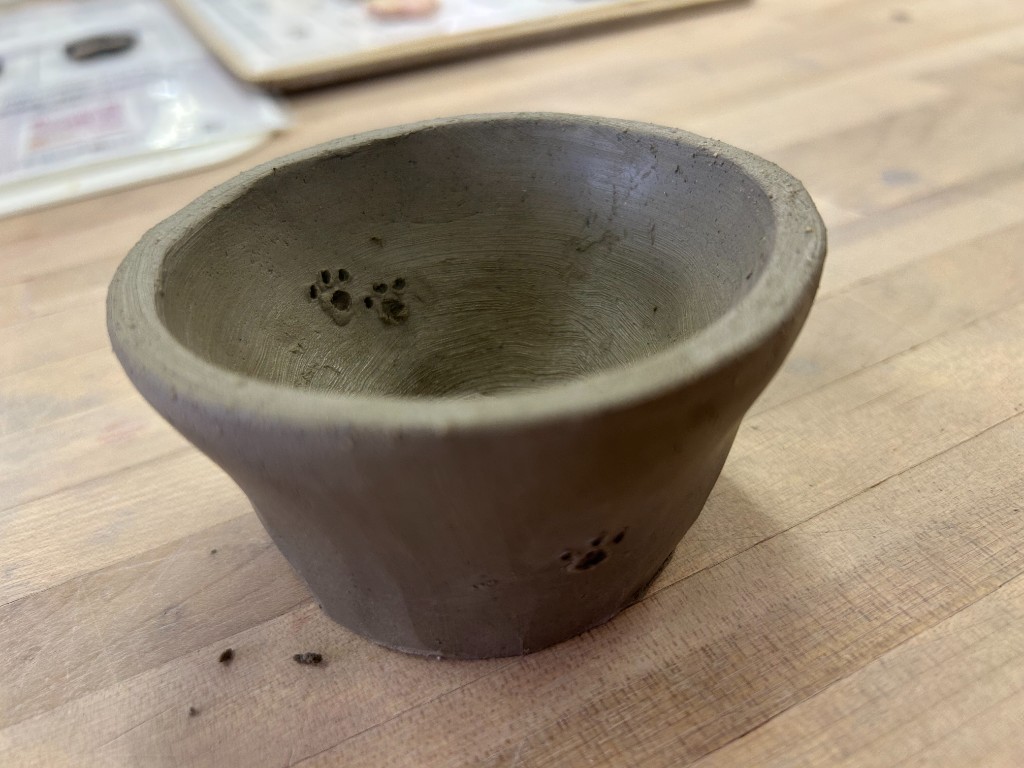
We made three pieces on this visit.
The bowl got a set of cat paw-print stamps pressed into the inside. Once fired, the paw prints should appear subtly in relief on the base—a small surprise every time you use it. The shape is anything but perfectly round, but that’s exactly the charm of hand-building.
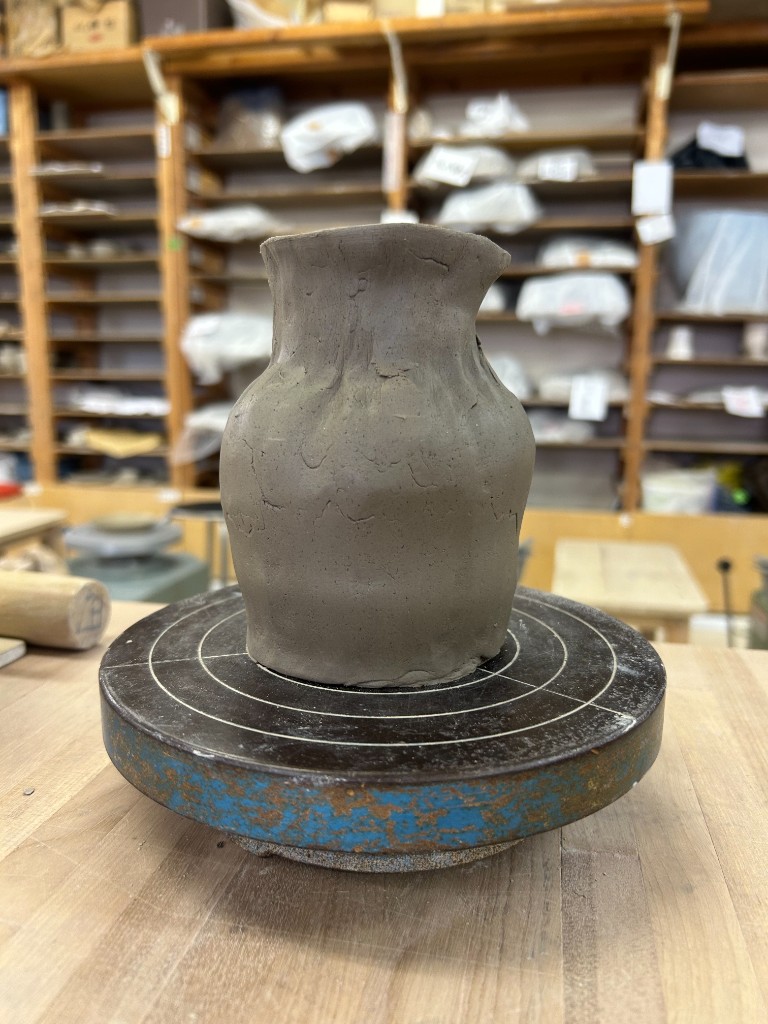
The tokkuri (sake flask) was the trickiest of the three—getting the neck to narrow and the lip to flare took a few attempts and some help from the instructor. The fingermarks left in the clay become part of the finished work. The ochoko (sake cup) was more compact and easier to shape, and imagining using the matched set together made the whole thing even more satisfying.
🔥 The Fired Result—A Completely Different Object
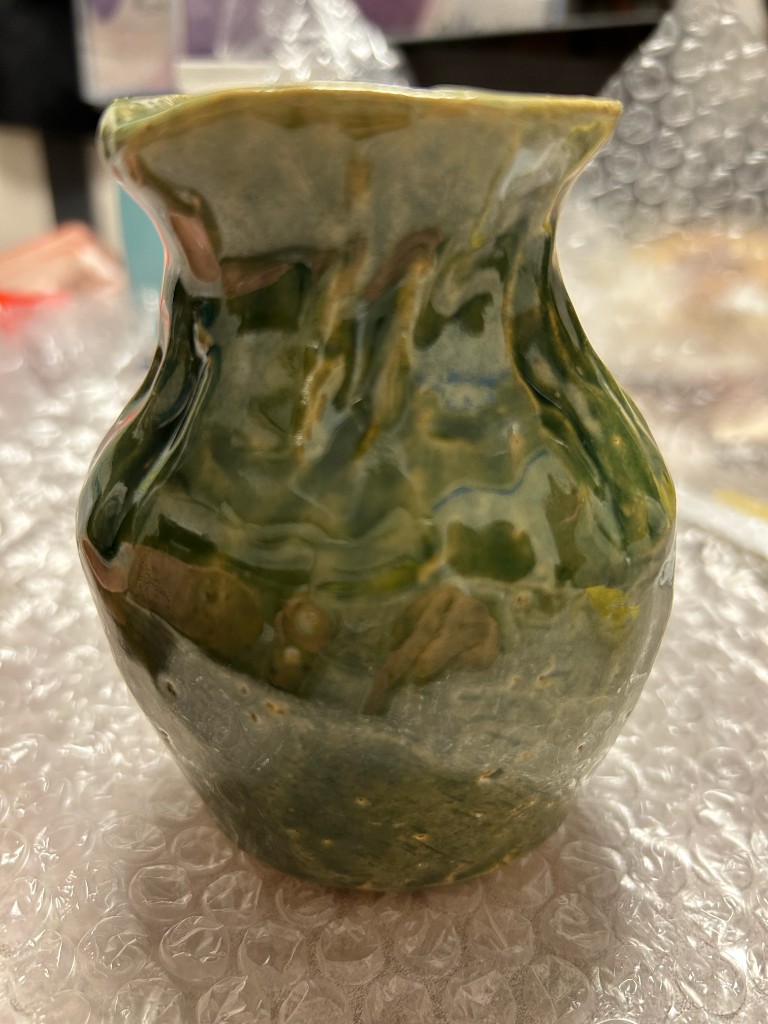
About a month later, this tokkuri arrived. What had been dull grey clay was now wrapped in a flowing gradient of blue-green to deep forest green, looking almost like a different object entirely. The surface shows trails where the glaze ran during firing and small pockmarks in the skin—details that make it unmistakably handmade. The slightly lopsided lip, which felt like a flaw at the time, had become part of the character. The connection to the memory of making it turned imperfection into affection.
⏳ The Wait—Part of the Fun
Pieces are fired about one month after your session. Glazes, heat, and the natural shrinkage of clay during firing mean the finished work can look quite different from the raw clay you handed in—and that’s part of the magic. Shipping is available, so even if you’re a traveler passing through Sapporo, your piece can be sent directly to your home after firing (confirm details with the studio).
💡 Practical Tips
- Clothes: Wear something you don’t mind getting clay on. Aprons available for ¥100
- Time: The hands-on work itself takes about 1–1.5 hours
- Kids: Hand-building open from age 5; electric wheel from elementary school age
- What to bring: Nothing—all tools and materials are included
Summary
Maruyama Tobo’s hand-building experience is a genuinely memorable way to spend a morning or afternoon in Sapporo. The small-group format with instructor support means complete beginners can walk away with something they’re proud of. Making a bowl, tokkuri, and ochoko—each with a clear purpose in mind—made the creative process feel personal rather than just touristic. And the one-month wait for your fired piece keeps the trip’s memories alive long after you’ve left.
Pair it with a walk through Maruyama Park or Hokkaido Jingu Shrine next door for a full half-day in the area.
Maruyama Tobo Sunshine Maruyama 1F, 23-2-20 Odori-nishi, Chuo-ku, Sapporo / TEL: 011-615-1858 Hours: 10:00–18:00 (Tue & Wed until 20:00) / Closed: Irregular Official site / Google Maps